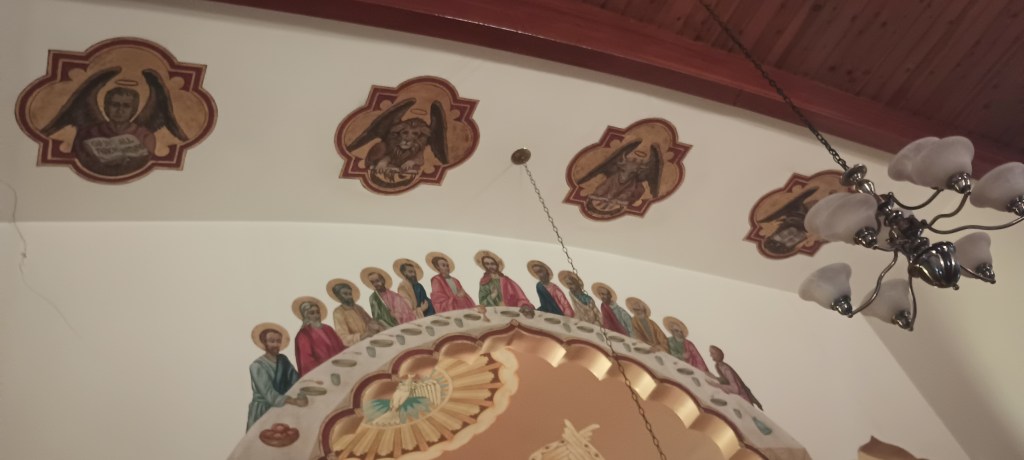
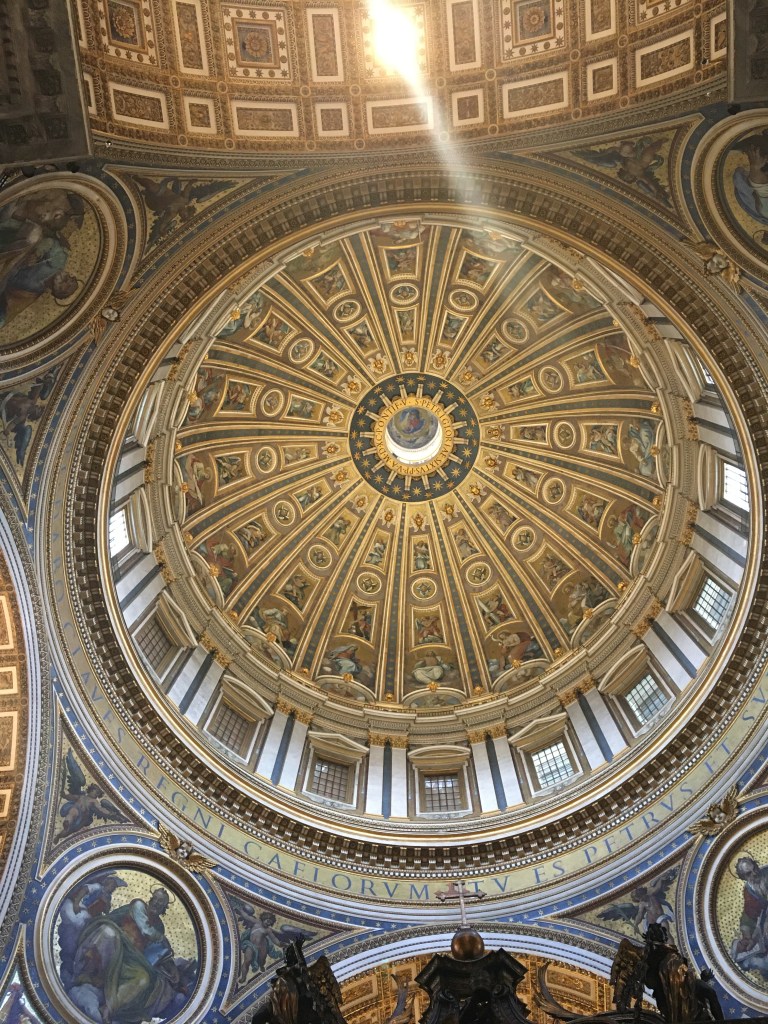
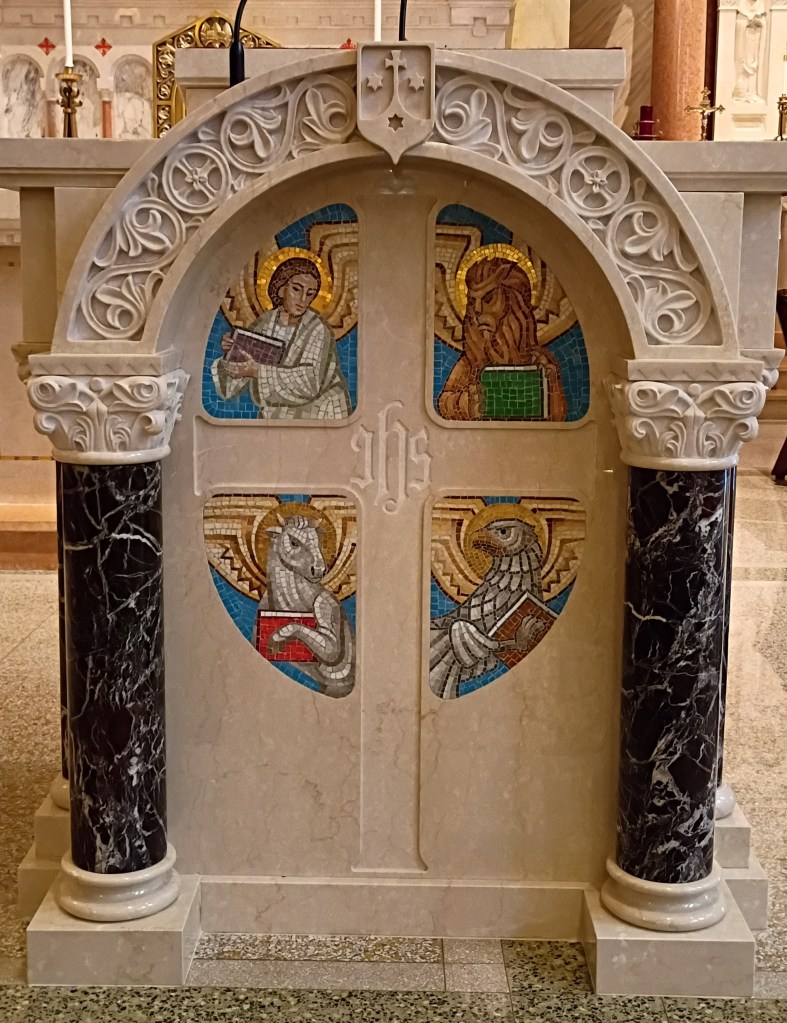
Catholic Churches often portray some sort of images or symbols of the four evangelists. Traditionally each one is associated with a symbol based on the tetramorph (traditional name for the four living creatures) of Ezekiel 1: 4-14 and Revelation 4: 6-7. The Fathers of the Church associated each of the evangelists with one of the “faces” of the tetramorph and St. Jerome’s connections are the most authoritative. See below for the specific symbols of each evangelist.
Note about Photos: Please click through to view complete photos. All photo information listed left to right, top to bottom. All photos taken by members of the Van Hecke family. All rights reserved.
Evangelist symbol/image sets: Engravings from the ambo at the St. Louis Cathedral, St. Louis, Missouri. Monstance from St. Raphael Church in Old Mill, Illinois. Ambo from St. Mary Major in Rome, Italy Images from the dome of St. Stanislaus Basilica, Winona, Minnesota. Symbols from the Proto-cathedral of St. Mary in Van Nuys, California. Mosaics from the pendentives of the dome of St. Peter’s Basilica in Vatican City. Ambo from Holy Hill Basilica and National Shrine of Mary Help of Christians, Hubertus, Wisconsin.
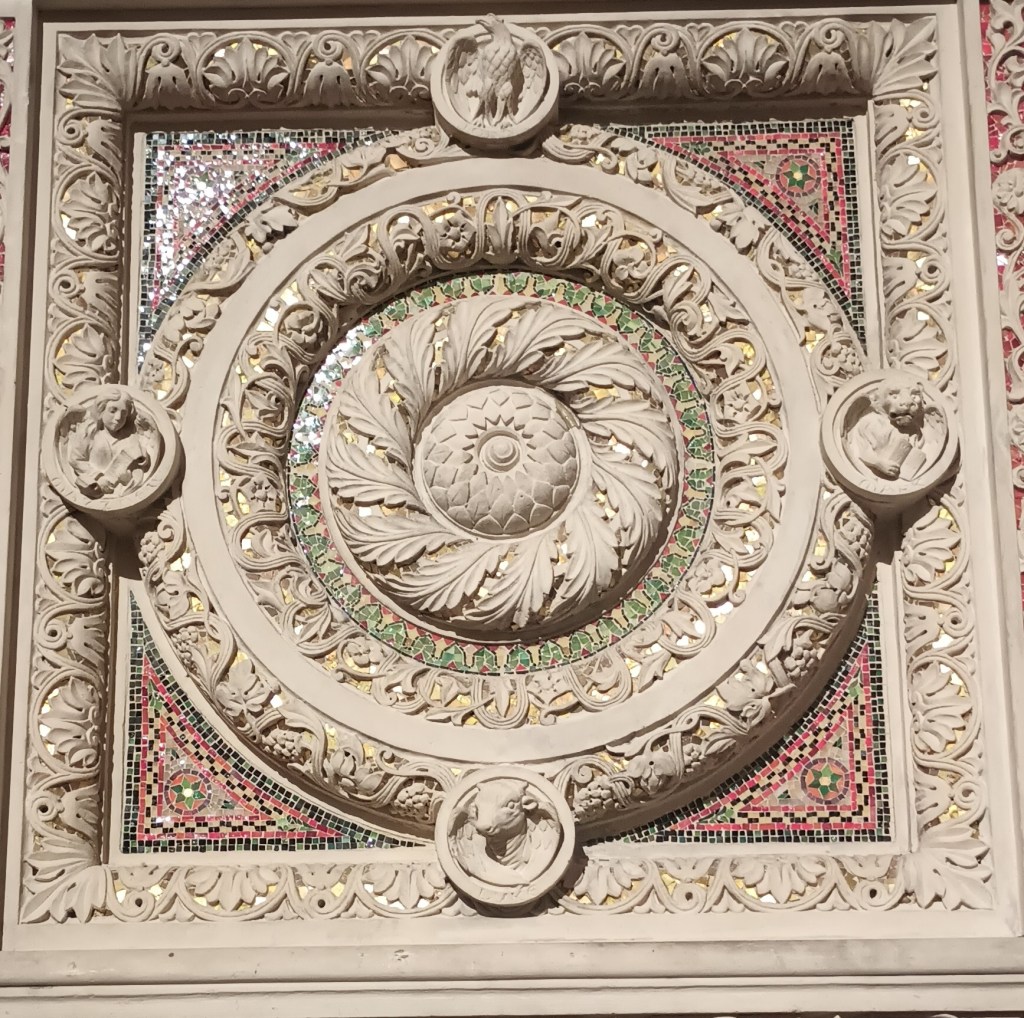
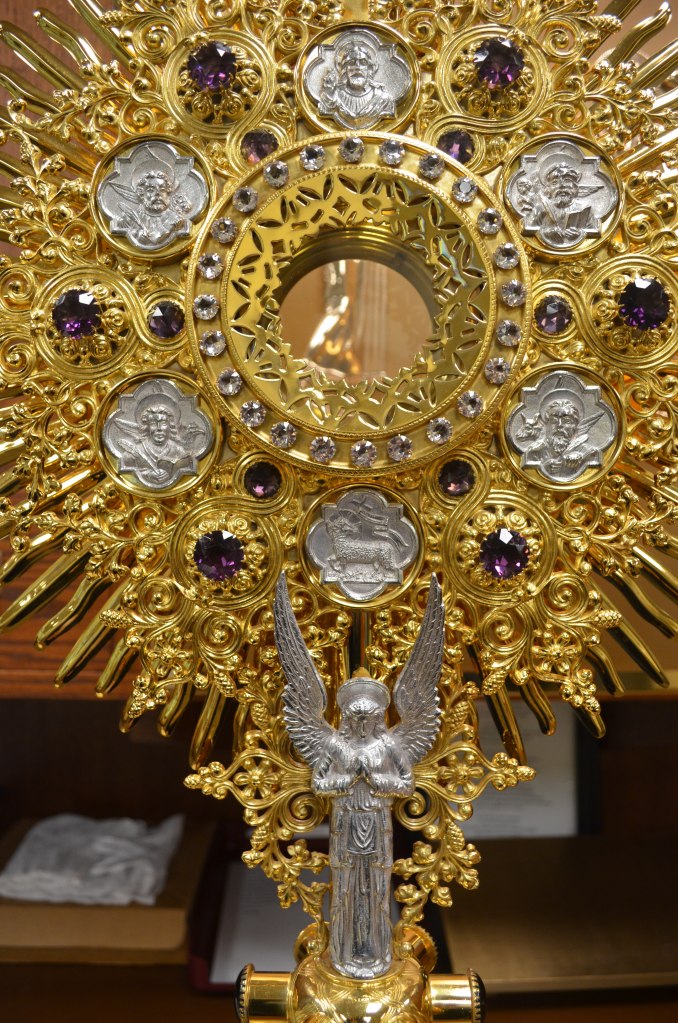
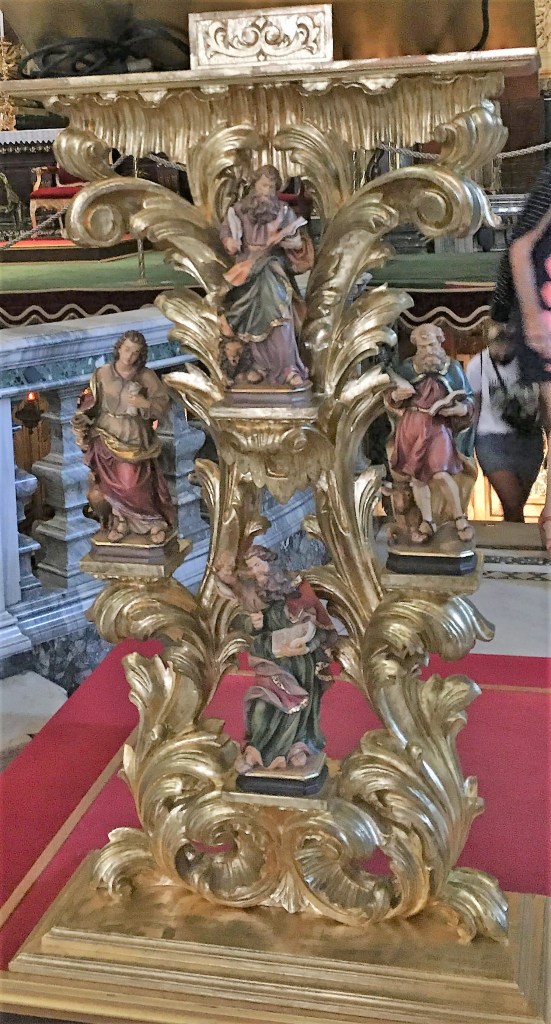
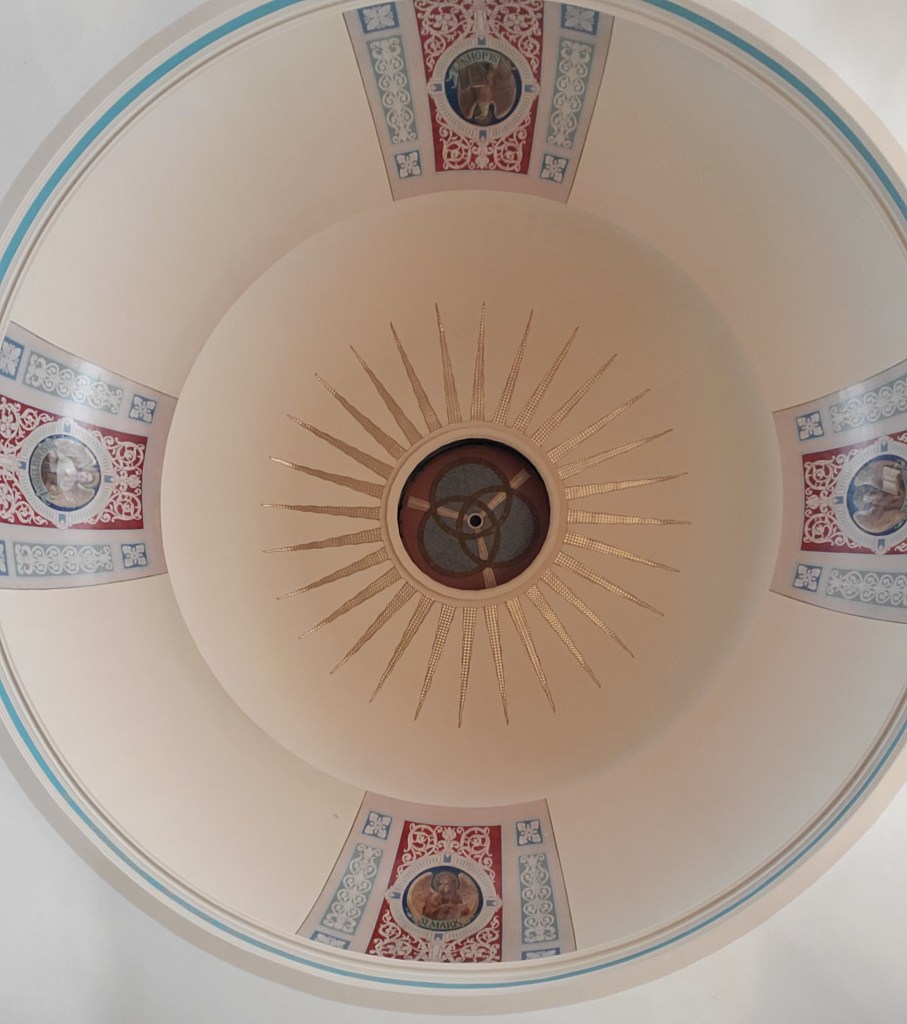
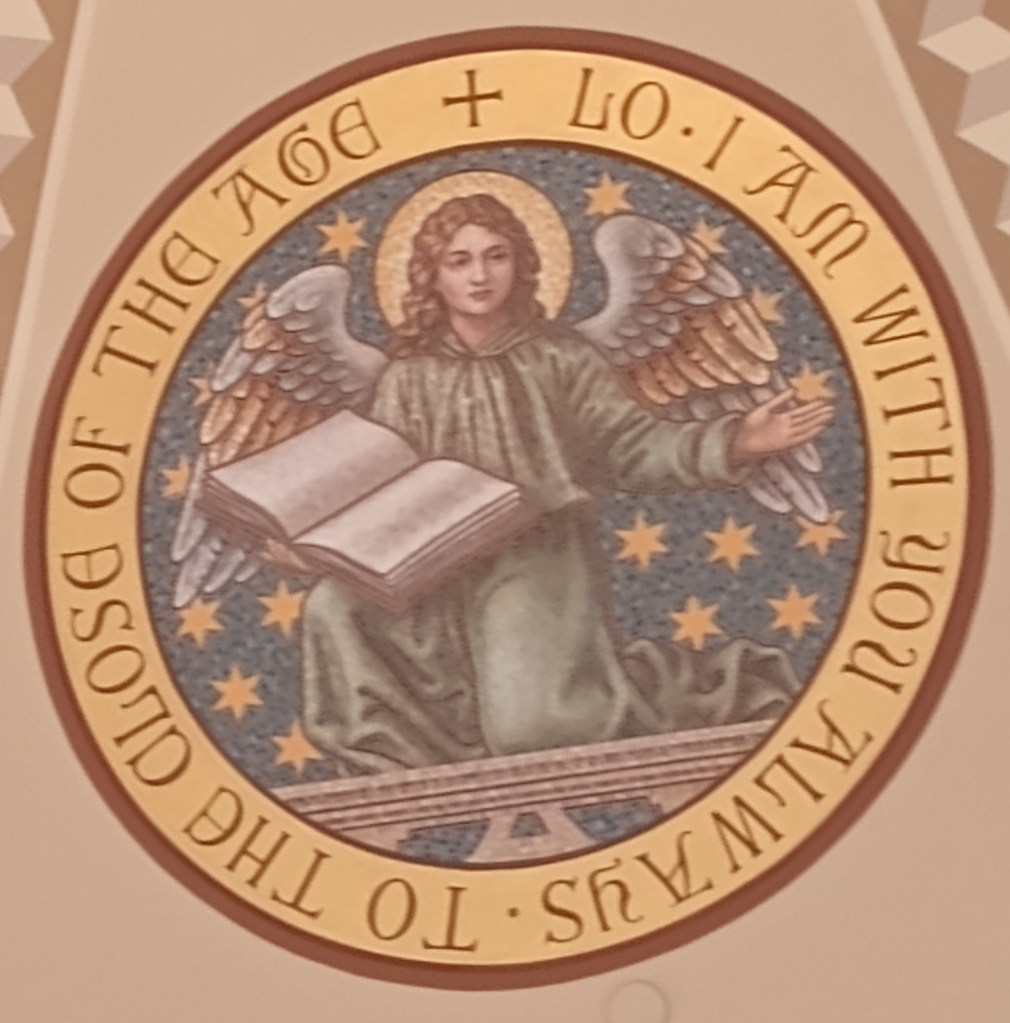
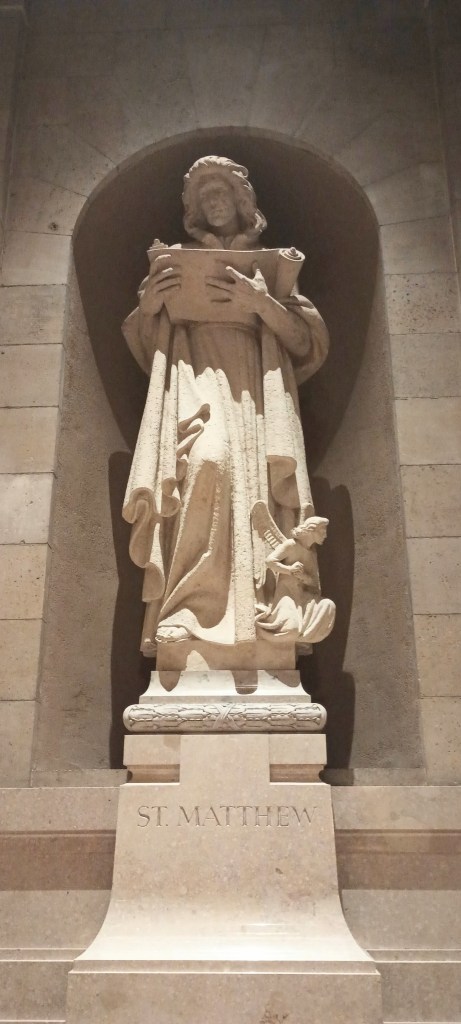
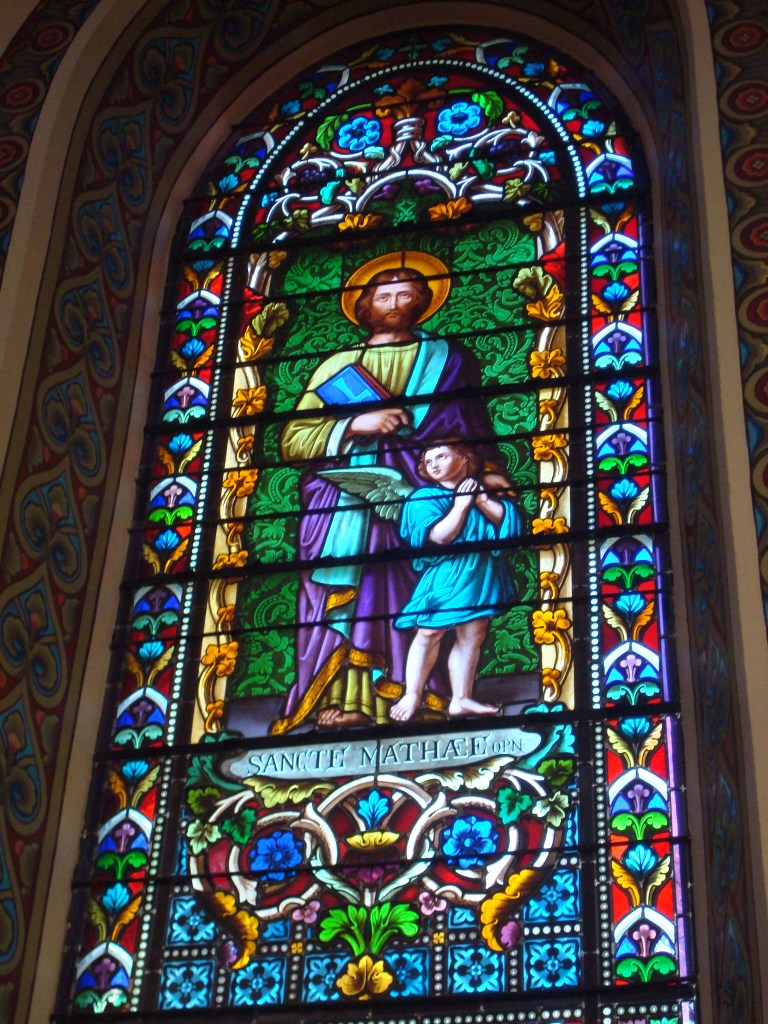
St. Matthew symbol: a winged man (not an angel) – St. Jerome thought the man was an appropriate symbol because Matthew’s Gospel starts with the genealogy of Jesus and the wonder of God becoming man.
Medallion from St. Charles Catholic Church, Hartland, WI. Statue from St. Paul Cathedral, St. Paul, Minnesota. Stained Glass window from St. Francis Cathedral, Santa Fe, New Mexico.
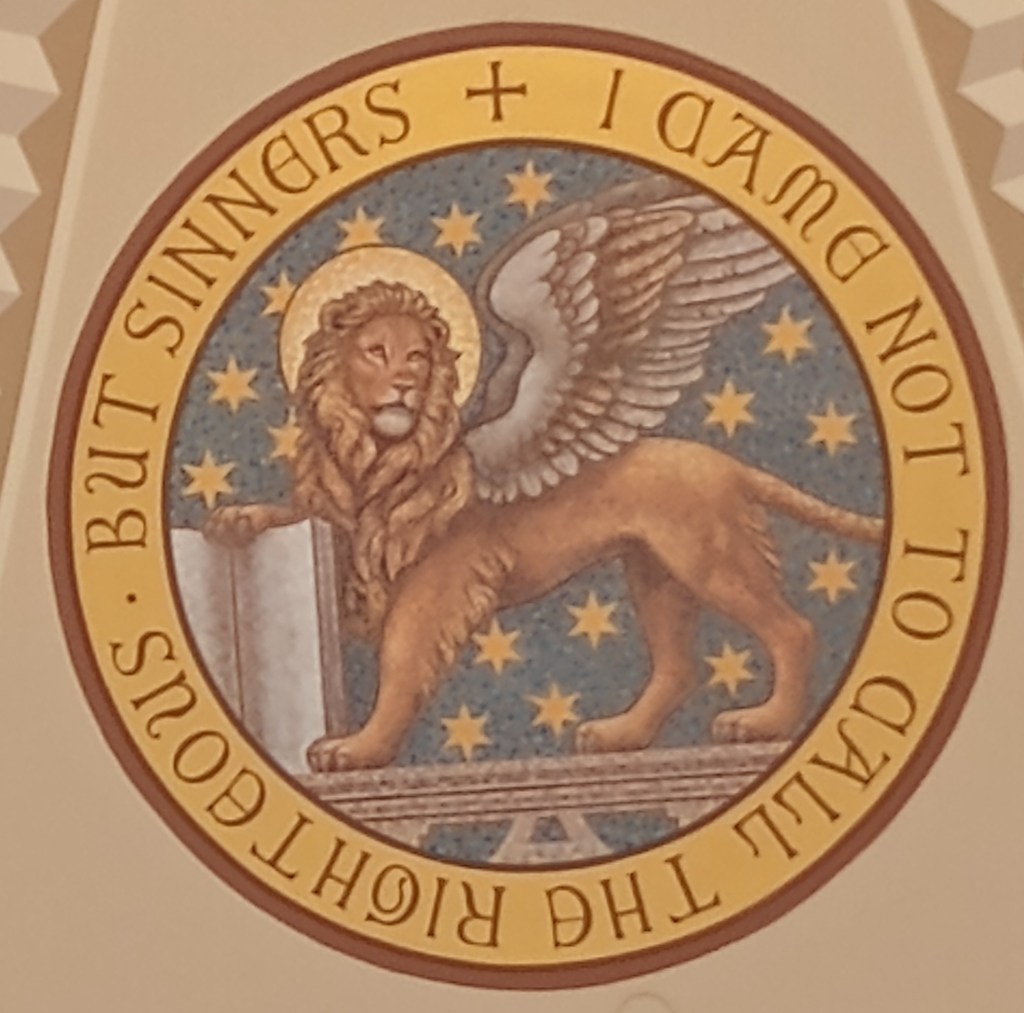
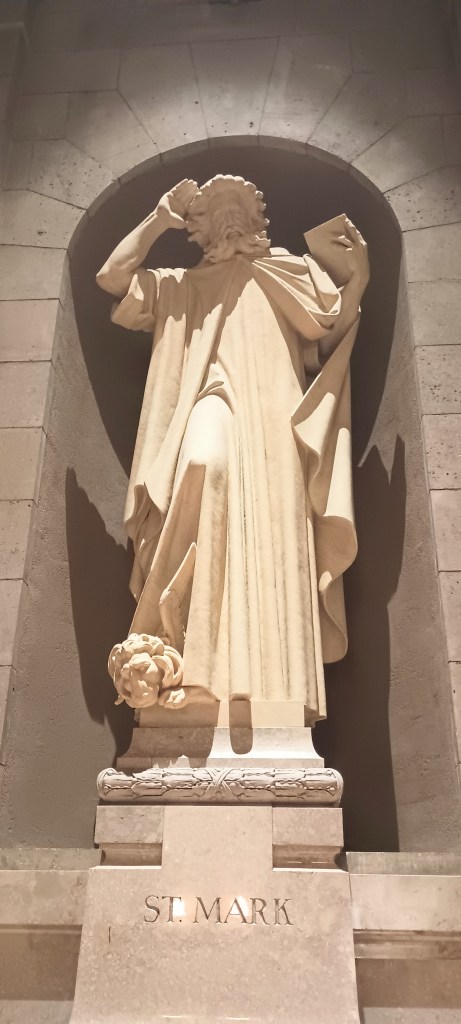
St. Mark Symbol: a winged lion, because Marks’ Gospel begins with the voice of John the Baptist crying out in the wilderness to prepare the way for the Lord. This voice was likened to a lion roaring in the African desert. (St. Mark was the Apostle to Africa).
An image from Blessed Sacrament Church, Springfield, Illinois. Medallion from St. Charles Church, Hartland, Wisconsin. Statue from St. Paul, Cathedral, St. Paul, Minnesota.

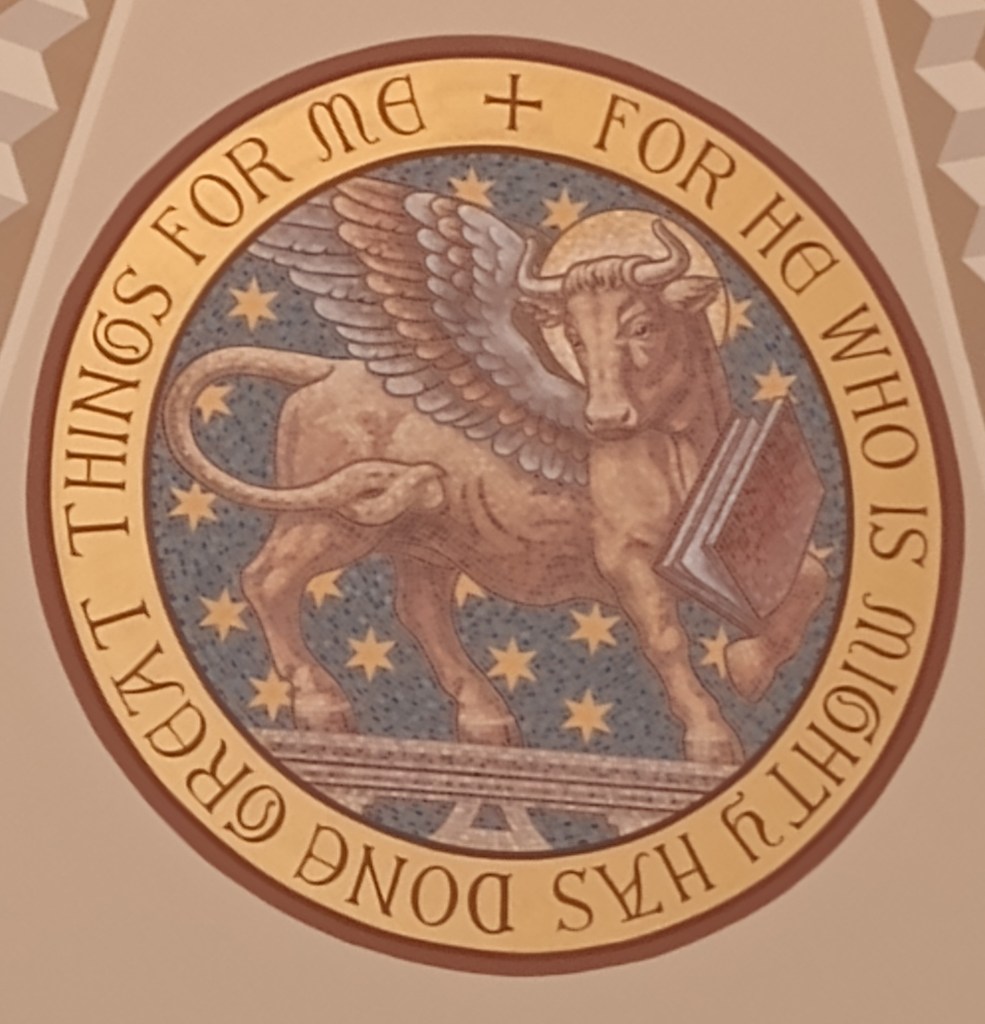
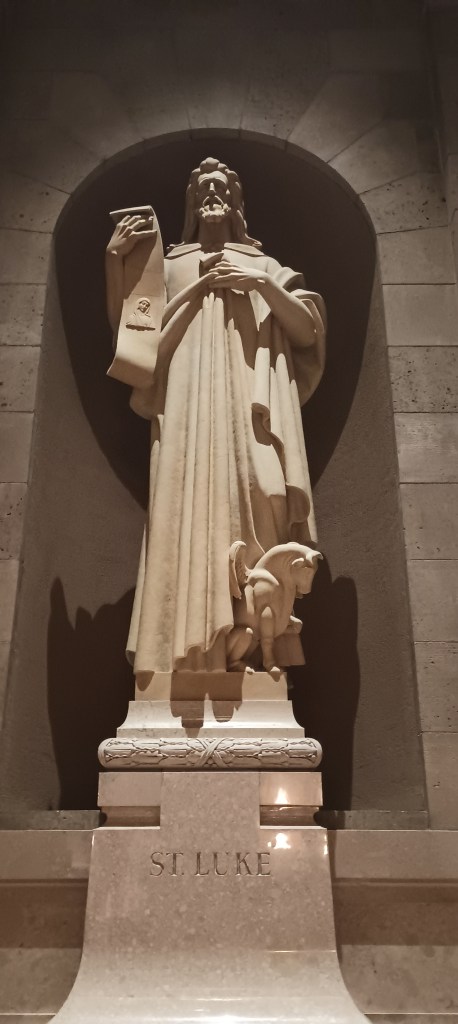
St. Luke symbol: winged ox, because Luke’s Gospel starts with the priesthood of Zechariah and the temple were the ox was offered to God in sacrifice.
Medallion from St. Charles Church, Hartland, Wisconsin. Statue from St. Paul Cathedral, St. Paul, Minnesota. Stained Glass window from Loretto Chapel, Santa Fe, New Mexico.

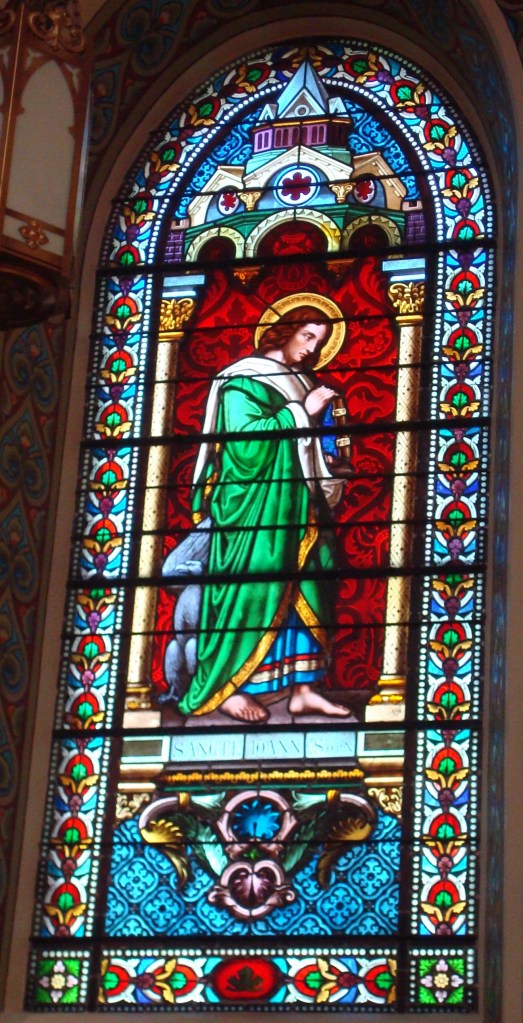
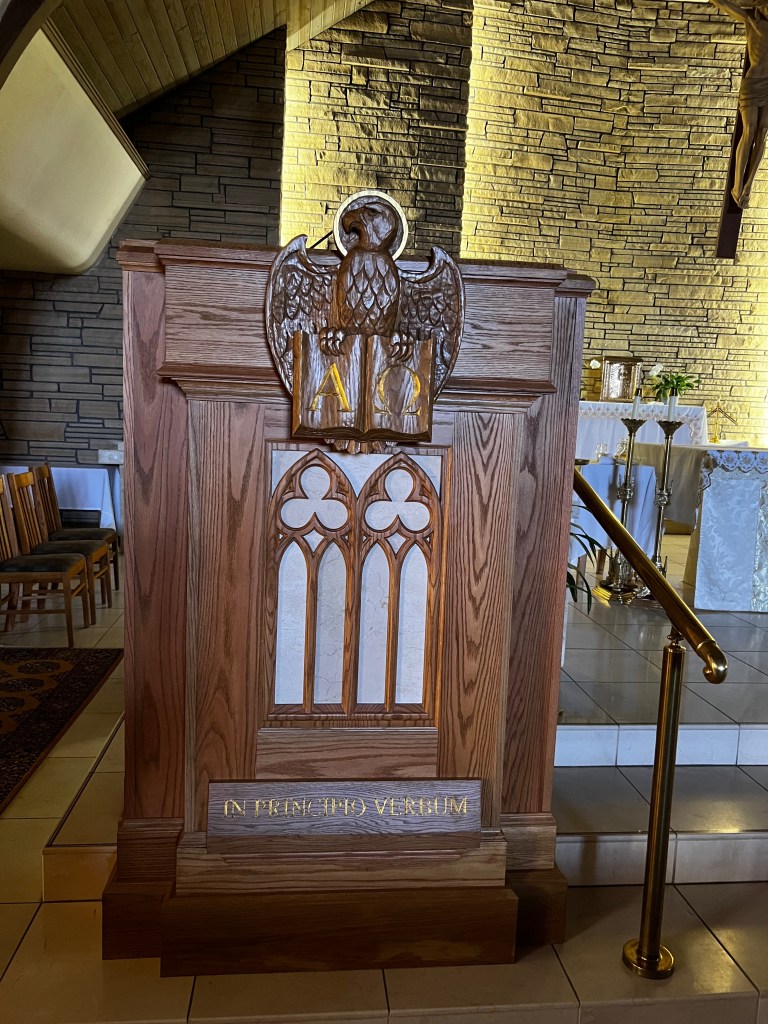
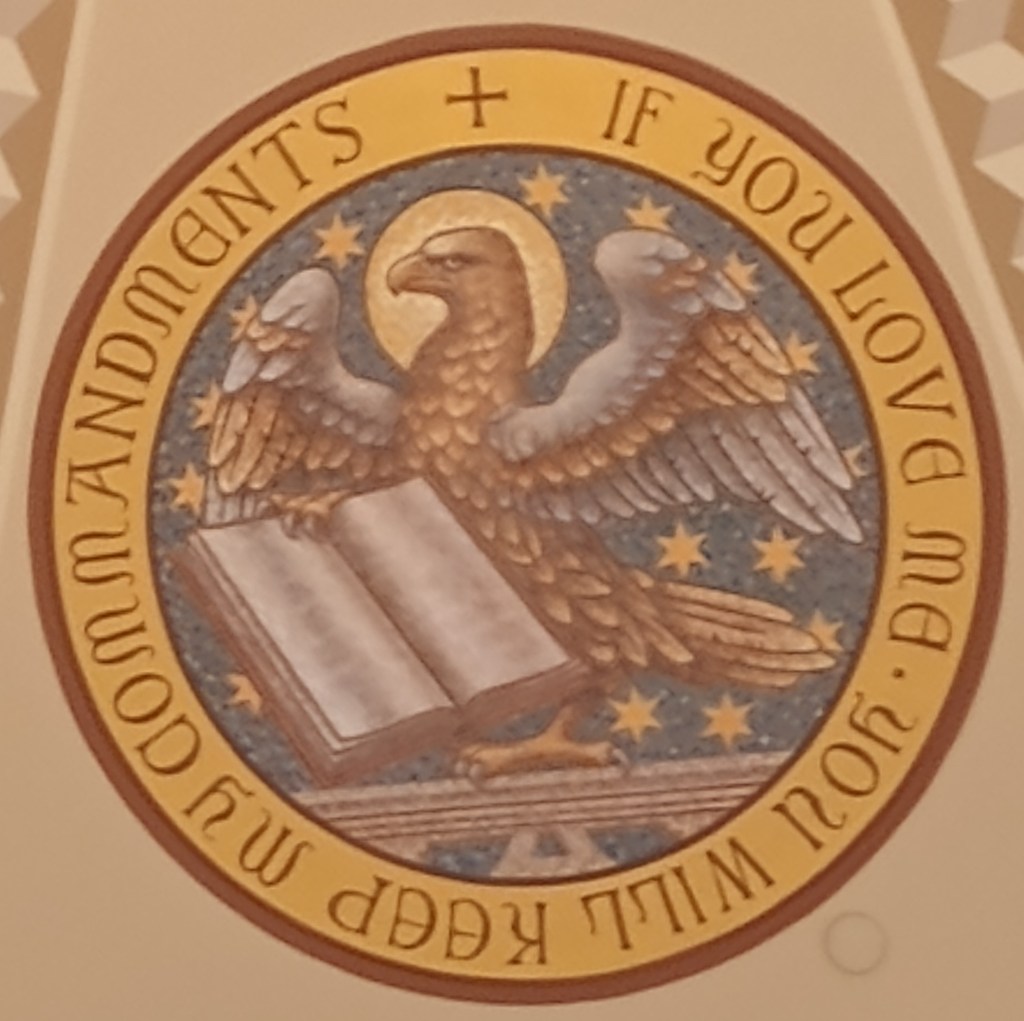
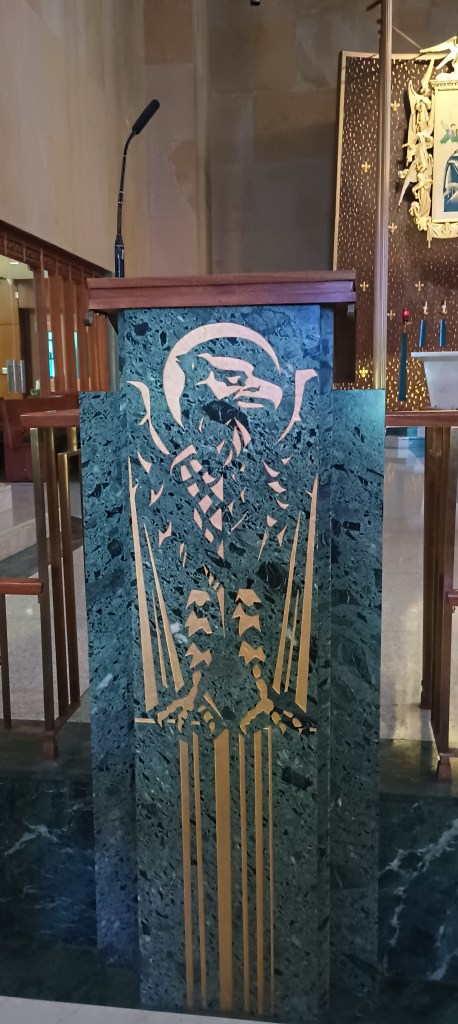
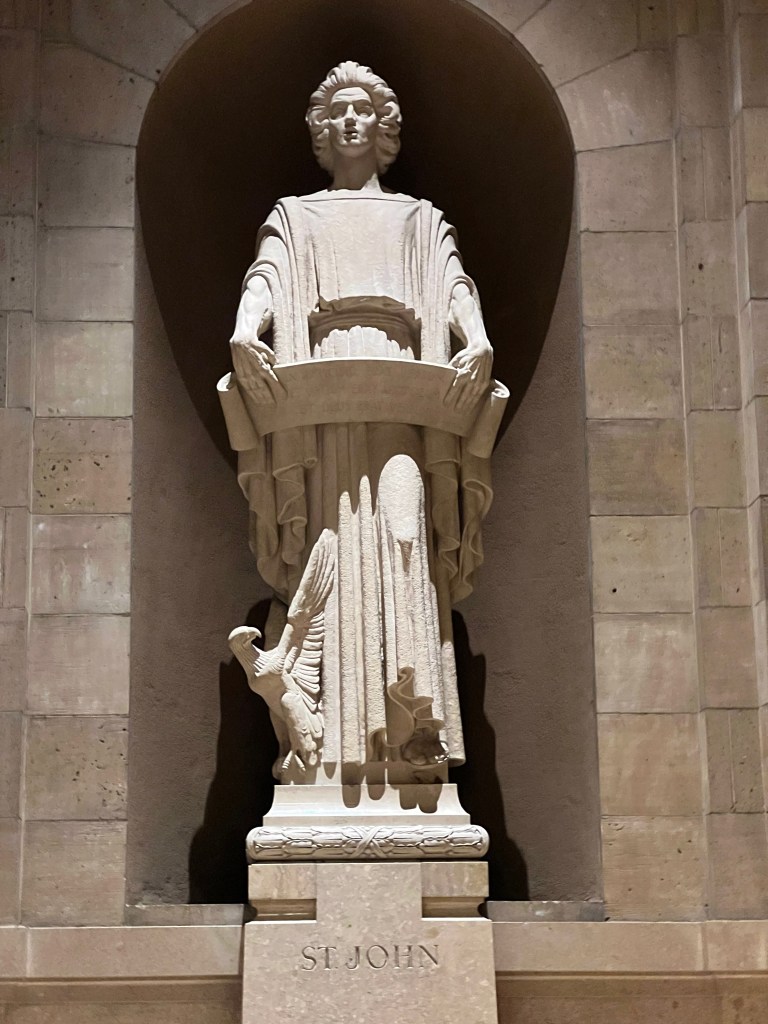
St. John Symbol: eagle, because his writings soars to the heights of heaven, eagles can see farther than others and can look at the sun without damage for a short time. St. John’s Gospel emphasizes the divinity of Jesus.
Ambos often single out St. John’s Gospel in particular.
Stained glass window from St. Francis Cathedral, Santa Fe, New Mexico. Ambo from Our Lady of the Rosary Church, Lander, Wyoming. Medallion from St. Charles Church, Hartland, Wisconsin. Ambo from Our Lady of Perpetual Help Cathedral, Rapid City, South Dakota. Statue from St. Paul Cathedral, St. Paul, Minnesota.
I struggled for many years as a catechist to remember which symbol went with which evangelist in order to share it with the students when I showed them our beautiful Book of the Gospels. Finally, my son taught me (though it’s not perfectly accurate, it still helps me a lot) that you can remember ALOE: Angel, Lion, Ox, Eagle; for Matthew, Mark, Luke, John. (Just remember that the “angel” is really a “winged man”.)
Bibliography:
Emblems of Saints: By Which They are Distinguished in Works of Art by F.C. Husenbeth, Longman, Green, Longman, and Roberts; London; 1860
Entering Heaven on Earth: The Signs, Symbols and Saints of Catholic Churches by Fr. Lawrence Lew, OP; Our Sunday Visitor; Huntington, Indiana; 2024
How to Read Churches: A Crash Course in Ecclesiastical Architecture by Denis R. McNamara; Rizzoli; New York; 2011
Stone and Glass: The Meaning of the Cathedral of Saint Paul by Dia Boyle; Cathedral of St. Paul; St. Paul, Minnesota; 2008
 Small Catholic